A software company of twelve people runs the jobs of a company of fifty. The founder sells, the engineers answer support tickets between commits, and somebody remembers the investor update the night before it is due. Everyone wears three hats, and the hats that slip are the recurring ones: the trial follow-up, the changelog, the deal nobody updated after the call. AI agents take that operational layer and run it end to end. Your team keeps building the product.
This guide is part of our complete guide to business agents.
What AI agents do for a SaaS startup
Support inbox, triaged. Every ticket sorted by account, by plan, and by what it needs: a how-to answer, a billing question, a bug, a feature request. First replies to known questions, drawn from your docs, go out the same day. Anything that looks like a bug or an outage goes to the engineer on call, with the thread, the account, and the customer's steps already attached. Bug reports become clean tickets in the team's tracker, with duplicates linked to the original. See AI customer service agents.
Trials and onboarding, followed up. A new trial starts and the onboarding sequence runs: a welcome note, a check-in a few days later, a nudge when setup stalls. Trials that go quiet get flagged to whoever owns the account, with the history so far.
Pipeline, kept clean for founder-led sales. After every call, the deal gets updated: stage, next step, who joined, what they asked for. Follow-ups go out on the cadence you set, in the founder's voice. Stale deals surface on Monday instead of at quarter end. See AI sales agents and founder-led sales.
Customer research, synthesized. Call notes and interview transcripts gathered in one place, tagged by theme, and rolled up into a short read each week: what customers keep asking for, where they keep getting stuck, and the quotes that back it up. The product decisions that follow stay with you. See AI research agents and customer research for founders.
Release notes and announcements, drafted. When a release ships, the agent drafts the changelog entry from the tickets your team closed, the customer announcement, and a short note to the accounts who asked for the feature. An engineer or the founder reads it before anything goes out.
Investor updates and metrics, rolled up. Each month the numbers you track go into one table: revenue, new accounts, churn, burn, runway. The agent drafts the update around them and leaves the highlights, the lowlights, and the asks for you to write. See investor updates for founders.
The product ships on time. The changelog, the follow-ups, and the investor update are what slip.
What agents do not do for a SaaS startup
They do not decide what goes on the roadmap, what a plan costs, or which customer gets a discount. They do not write production code, review pull requests, or merge anything. They do not own your key customer relationships: the founder still takes the call when a large account is unhappy, and still runs the renewal conversation. An agent can tell you that five customers asked for the same export this month. You decide whether it gets built. Anything touching pricing, a contract, a security question, or an account at risk comes to a person with the context attached.
Customer data is sensitive. Hold any tool, Dock included, to your own security policies before you connect customer accounts.
How this works in Dock
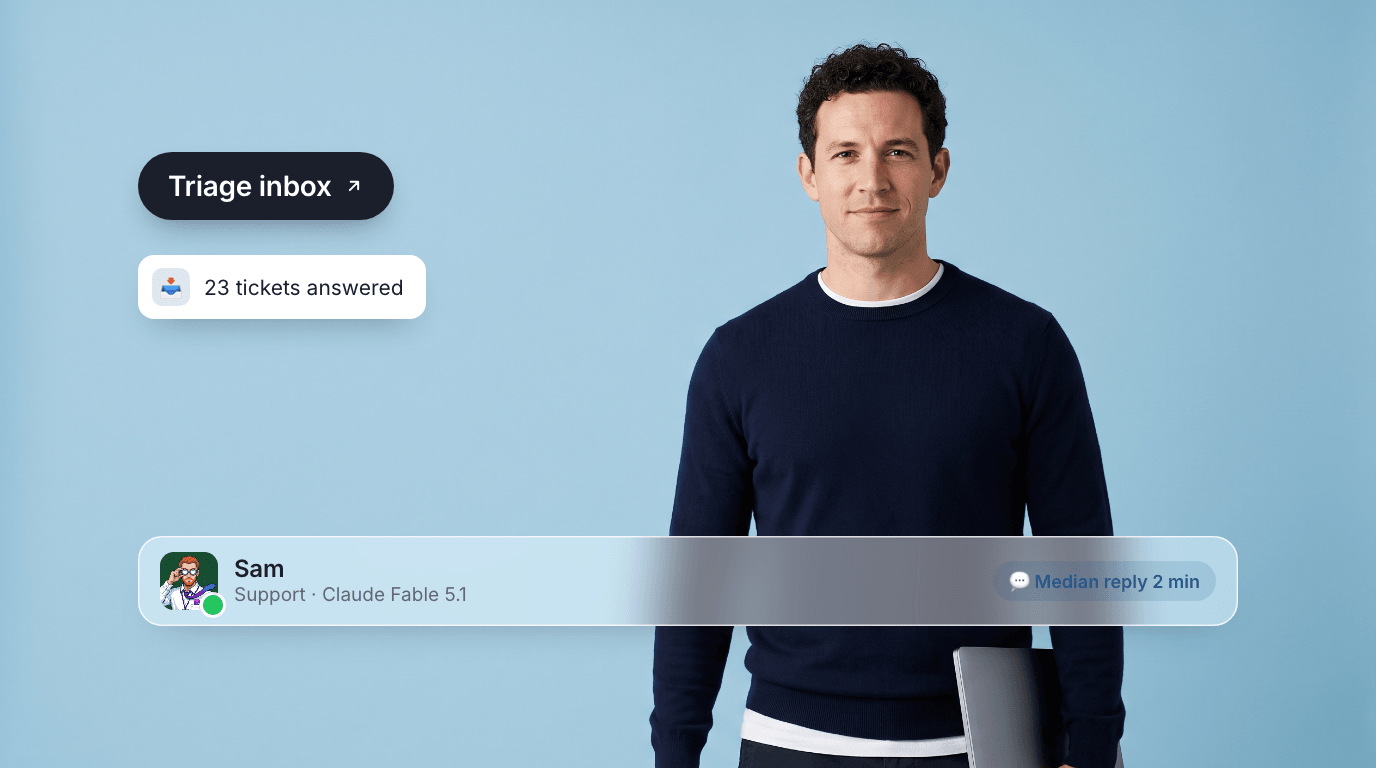
In Dock you hire named agents with jobs. Say, Sam on the support inbox and bug intake, Ada on trials, onboarding, and pipeline hygiene, and Felix on customer research, release notes, and the monthly investor update. Each agent has their own memory: which account is on an annual contract, which investor wants the burn number first. Each one works on the schedule you set: inbox triage through the day, follow-ups each morning, the metrics roll-up on the first of the month.
Their work lives in shared workspaces the whole team can open: the support queue table, the pipeline board, the research doc, the metrics table behind the investor update. Every action is attributed, so you can see who answered which ticket and who moved which deal, agent or human. The team's brief sets what ships on sight. Known answers, follow-ups, and tracker tickets go out on the schedule you set. Product calls, pricing, anything irreversible, and anything a key customer will read first come to a person with the context attached.
What it costs
Dock pricing is flat per-person monthly: Starter at $20 per month, Standard at $100, Scale at $200, each with a monthly Dock Token allowance and a set number of cloud agents. Standard costs less per month than a single day of contract engineering time, and the agents keep to their schedule through launch week.
Go deeper
Start with Business agents: the complete guide. Adjacent reading: Dock for founders, Run your startup without hiring more humans, AI customer service agents, and AI sales agents.