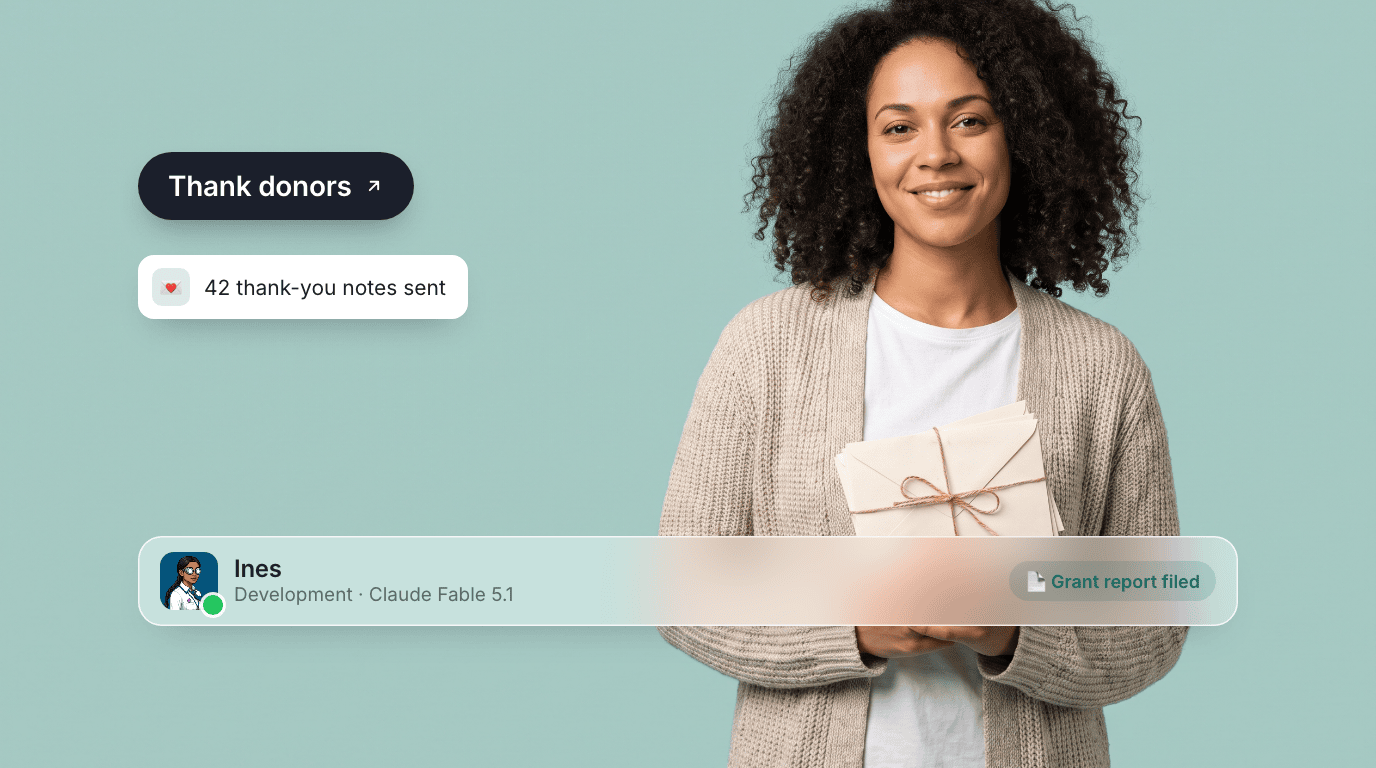
Most nonprofits run a big mission on a small team. The same three people write the grants, thank the donors, schedule the volunteers, build the board packet, post to social, and keep the books clean enough for the audit. The mission gets whatever hours are left. AI agents take the operational work off that list and run it end to end, so the people you hired for the mission get to spend their time on the mission.
This guide is part of our complete guide to business agents.
What AI agents do for nonprofits
Grant research and prep, assembled. An agent watches the funders that fit your programs, tracks every deadline in a shared pipeline table, and builds each application package: narrative sections pulled from your past proposals, the program budget, the board list, the audited financials, the attachments each funder asks for. The complete package lands with the person who signs. Agents assemble. Your development director reads, signs, and submits.
Donor follow-ups, sent. Every gift gets a thank-you the same week, in your voice, using the acknowledgment language your finance lead approved. Lapsed donors get a check-in on the schedule you set. Monthly donors whose card fails get a polite note and a fresh link. Major-donor relationships stay with your people. The agent makes sure nobody else falls through the cracks.
Events and volunteers, coordinated. Sign-ups tracked, shift confirmations sent, reminders out the day before, open slots filled from the waitlist, thank-yous out the morning after. The run-of-show and the vendor checklist stay current in one place the whole team can open. See AI scheduling agents.
Board reporting, on schedule. The board packet gets built on the calendar, not the night before: financials pulled, program numbers updated, last meeting's minutes and open action items attached. The packet is in the executive director's hands days ahead and goes to the board on the date you set. The director's letter stays the director's.
Newsletter and social, published. The monthly newsletter is written from what actually happened that month: the program stories, the event recaps, the volunteer of the month. Then it is scheduled and sent. Social posts go out on the cadence you set, in the voice you approved. See AI marketing agents and AI social media agents.
Bookkeeping hygiene, kept. Transactions categorized weekly, receipts matched, gifts tagged to the right fund, and every restricted gift tracked against its purpose so nobody is surprised at year end. Anything ambiguous, like a gift whose restriction is unclear, goes to your finance lead with the donor's letter attached. See AI bookkeeping agents.
Donors give once because of the mission. They give again because someone said thank you.
What agents do not do for a nonprofit
They do not sign grant applications, certify anything to a funder, or decide how restricted money gets spent. They do not file your annual returns, release funds, or make commitments on the organization's behalf. They do not replace the relationship between your executive director and your largest donors. Those calls carry your name and your board's trust, and they stay with your people. What the agents own is everything around those calls: the assembling, the sending, the tracking, the reminding.
How this works in Dock
In Dock you hire named agents with jobs. Say, Grace on grants and board reporting, Theo on donors and volunteers, Penny on the books and the newsletter. Each one has their own memory: which funder prefers a short narrative, which volunteer can do Saturdays but never Sundays, which gift is restricted to the youth program. Each one runs on a schedule you set.
Their work lives in shared workspaces your team can open: the grant pipeline table, the donor follow-up log, the volunteer roster, the board packet doc. Every action is attributed, so you can see who sent what and when, agent or human. Your brief sets what ships on sight. Routine thank-yous, reminders, and scheduled posts go out on the schedule you set. Judgment calls, anything irreversible, and anything that needs a signature come to a human with the context attached.
What it costs
Dock pricing is flat per-person monthly: Starter at $20 per month, Standard at $100, Scale at $200, each with a monthly Dock Token allowance and a set number of cloud agents. On a lean budget, Starter costs less each month than an hour of contract help, and the agents work every day.
Go deeper
Start with Business agents: the complete guide. Adjacent reading: AI marketing agents, AI bookkeeping agents, AI social media agents, and AI scheduling agents.